
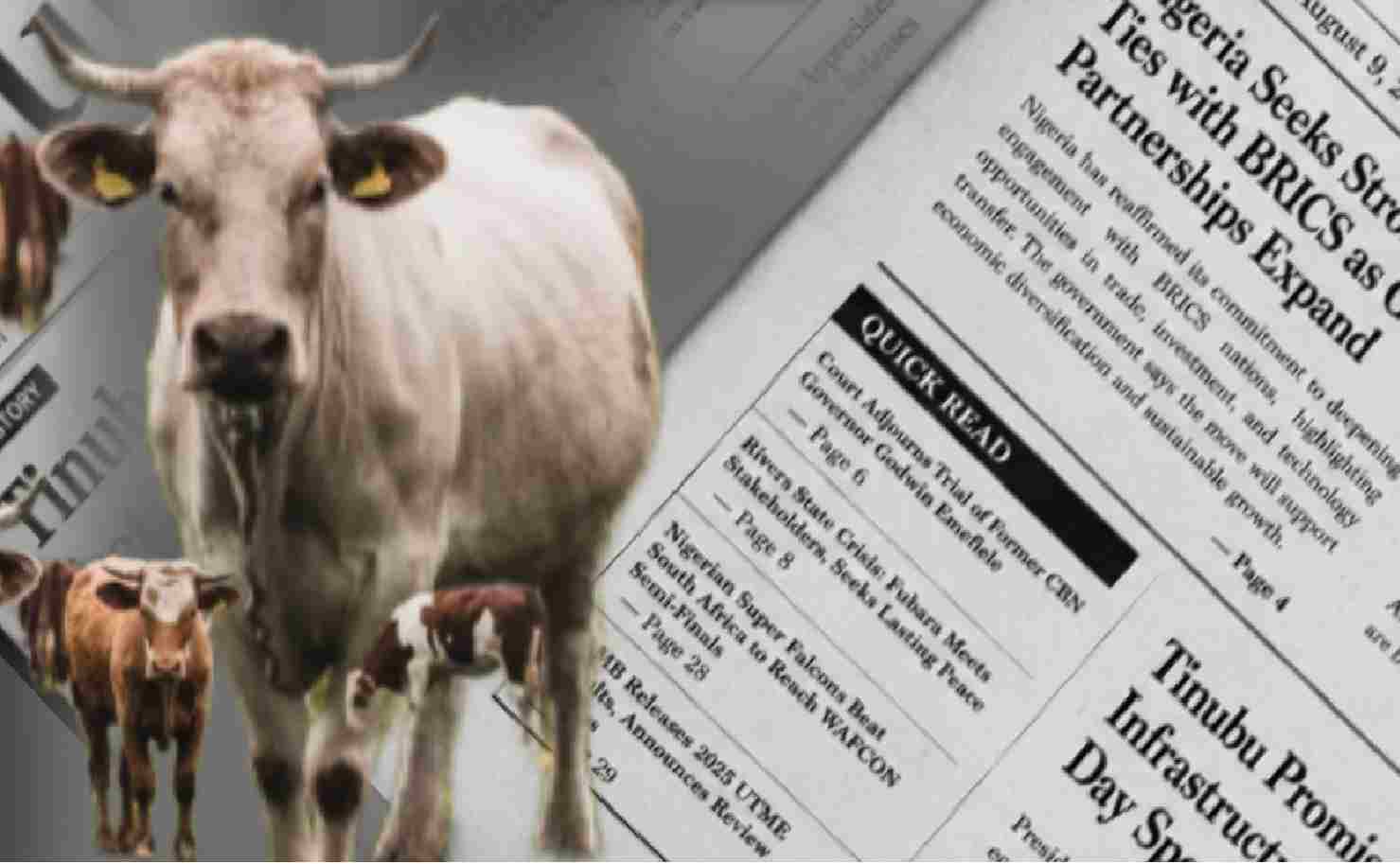
The Federal Government has inaugurated a strategic border animal inspection and resting facility in Cross River State as part of efforts to improve disease surveillance and modernise livestock movement across Nigeria’s borders.
The facility brings livestock inspection, quarantine, vaccination and temporary animal holding services into a single location. It is one of 12 facilities expected to strengthen Nigeria’s ability to control transboundary animal diseases.
The project is being implemented under the Livestock Productivity and Resilience Support Project as part of wider reforms to the livestock industry. The Minister of Livestock Development said the initiative would improve animal-health systems, livestock traceability and the safe movement of animals.
- INEC Trying to Reduce Vote-buying for 2027 Election as it Pleads for Media Support

- After Over 100 Years of Malaria Surveillance and Research in Nigeria, FG Targets Elimination With Health Financing
- Journalists Demand Better Welfare and Stronger Regulation of New Media



Long-distance movement of cattle and other livestock can expose animals to disease, stress and mortality, particularly where adequate resting, veterinary and inspection facilities are unavailable.
Authorities hope the new centres will reduce those risks while improving the monitoring of animals entering and leaving the country. The government also wants to replace informal cross-border livestock movements with a more regulated and traceable system.
Such a system could improve disease surveillance, protect consumers and facilitate legitimate livestock trade. Livestock traders and pastoralists were encouraged to view the facility as a service intended to protect their animals and investments rather than as an additional barrier to trade.
The centre will be operated by the Nigeria Agricultural Quarantine Service.
The decision to establish a strategic border livestock inspection and resting centre represents an important shift in how the country approaches animal health and livestock management.
For decades, much of Nigeria’s livestock movement has relied on informal systems with limited documentation, making it difficult to monitor diseases, verify ownership or understand how animals move across states and international borders.
A modern inspection centre begins to address those challenges.
The Federal Government has already announced plans to introduce digital registration and biometric identification for cattle, sheep and goats.
Viewed together, these two initiatives are far more significant than either project in isolation.
One creates the physical infrastructure for inspection. The other creates the digital infrastructure for traceability. Combined, they have the potential to fundamentally change how Nigeria manages animal health.