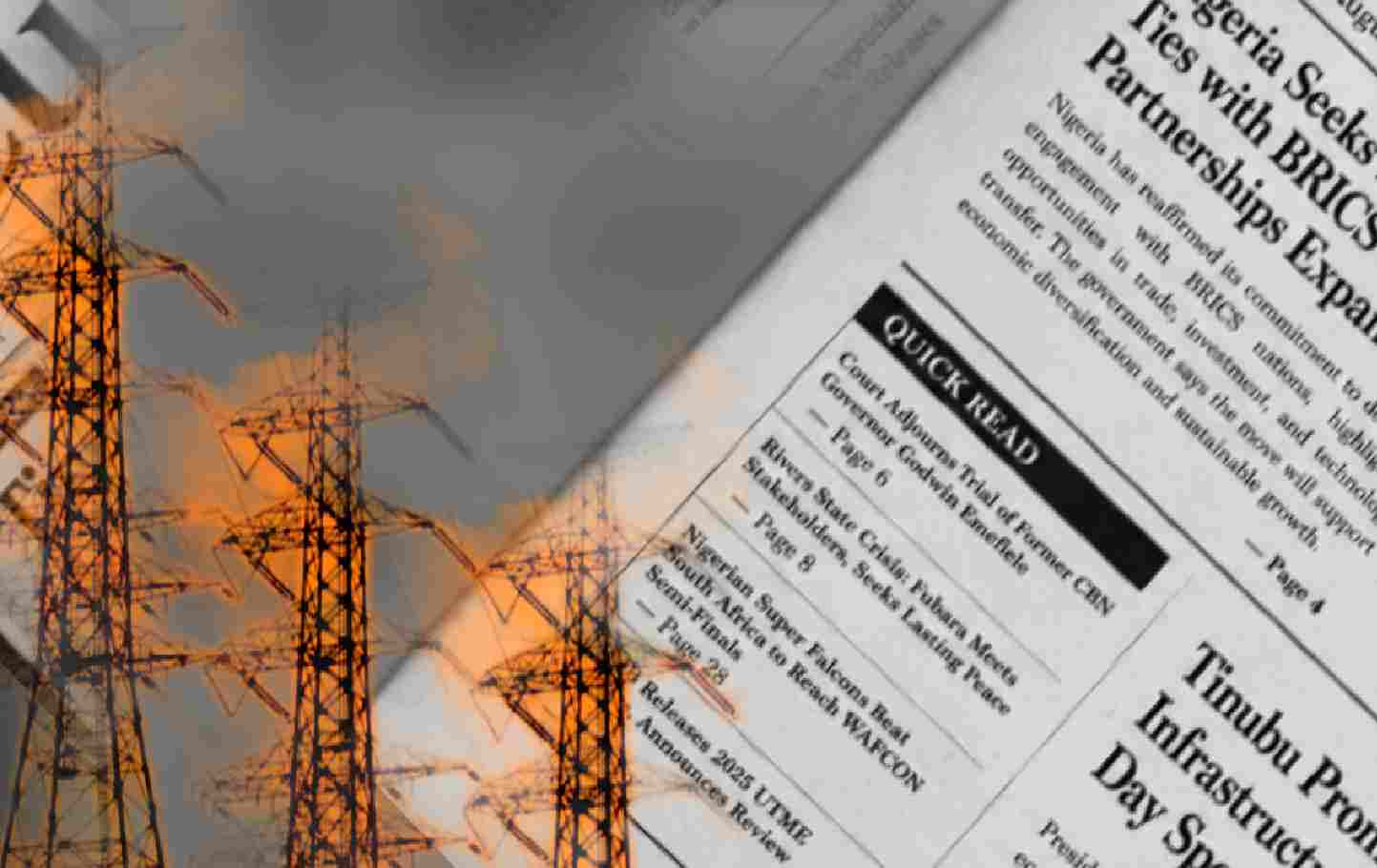
The House of Representatives has intensified its investigation into Nigeria’s power sector, questioning why electricity challenges remain despite more than $32 billion reportedly spent on improving the industry.
The House Ad Hoc Committee on Power Sector Reforms and Expenditure engaged the Minister of Power during an interactive session examining the state of electricity infrastructure and the effectiveness of reforms introduced since privatisation.
The investigation originated in the Seventh National Assembly and has continued into the current Assembly. Lawmakers identified inadequate gas supply to thermal power plants, accumulated debts and weaknesses in electricity transmission and evacuation among the major challenges confronting the industry. Nigeria has more than 13,000 megawatts of installed generation capacity, but limitations within the electricity value chain mean considerably less power can actually be delivered to consumers.
The committee heard that even where between 5,000MW and 7,800MW could potentially be generated, transmission and evacuation constraints remain significant.
The Power Minister told lawmakers that the Tinubu administration was confronting problems accumulated over several decades and outlined initiatives under the Renewed Hope Agenda aimed at increasing electricity supply and supporting employment.
The committee is expected to conclude its investigation and present a report to the House for consideration.
- INEC Trying to Reduce Vote-buying for 2027 Election as it Pleads for Media Support

- After Over 100 Years of Malaria Surveillance and Research in Nigeria, FG Targets Elimination With Health Financing
- Journalists Demand Better Welfare and Stronger Regulation of New Media



Transmission Challenges in Nigeria’s Persist
Perhaps the most revealing aspect of the committee’s discussion concerns transmission.
Lawmakers acknowledged that Nigeria’s installed generation capacity exceeds what can actually be evacuated through the transmission network.
That distinction matters as power plants can only generate electricity that the transmission system is capable of carrying. Once transmission reaches its limit, additional generation capacity produces diminishing returns. Nigeria has therefore reached the point where solving one problem increasingly requires solving another.
Investment decisions should consequently become more coordinated. Expanding generation without strengthening transmission risks creating expensive idle capacity. Likewise, strengthening transmission without addressing gas supply or distribution constraints simply moves the bottleneck elsewhere. The sector should be planned as one integrated system rather than three largely separate industries.